Case Study
How We Scaled a Manufacturing AI Vision Pipeline
Client Context (anonymous): Global manufacturing group, multi-plant operations, high-mix production with strict quality SLAs.
Challenge
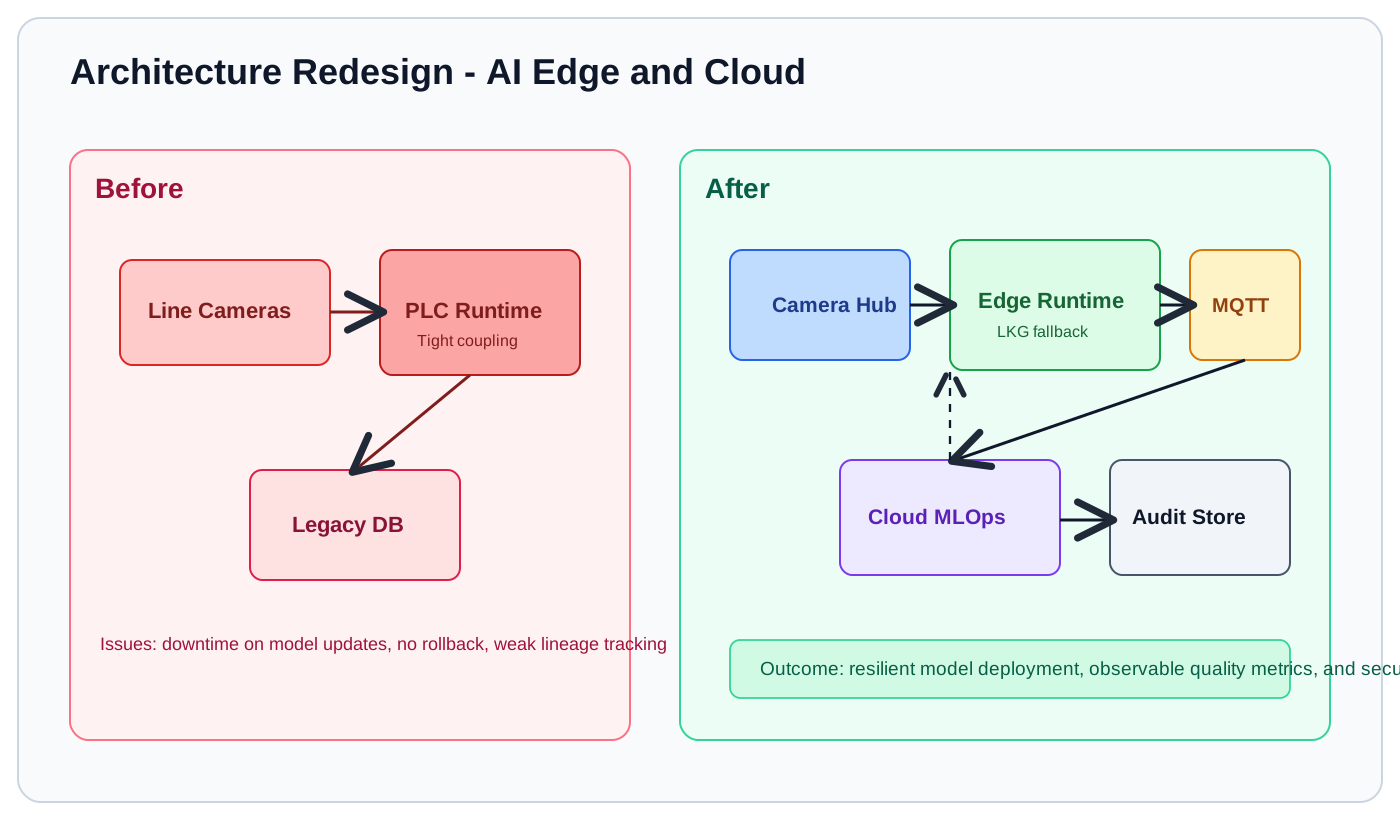
- Computer vision models drifted between plants because lighting, camera angle, and line speed varied by shift.
- Inference workloads were tightly coupled to line controllers, causing downtime when model updates failed.
- Security and governance controls for training data, model artifacts, and edge deployment were inconsistent.
Our Process
1. Threat Modeling
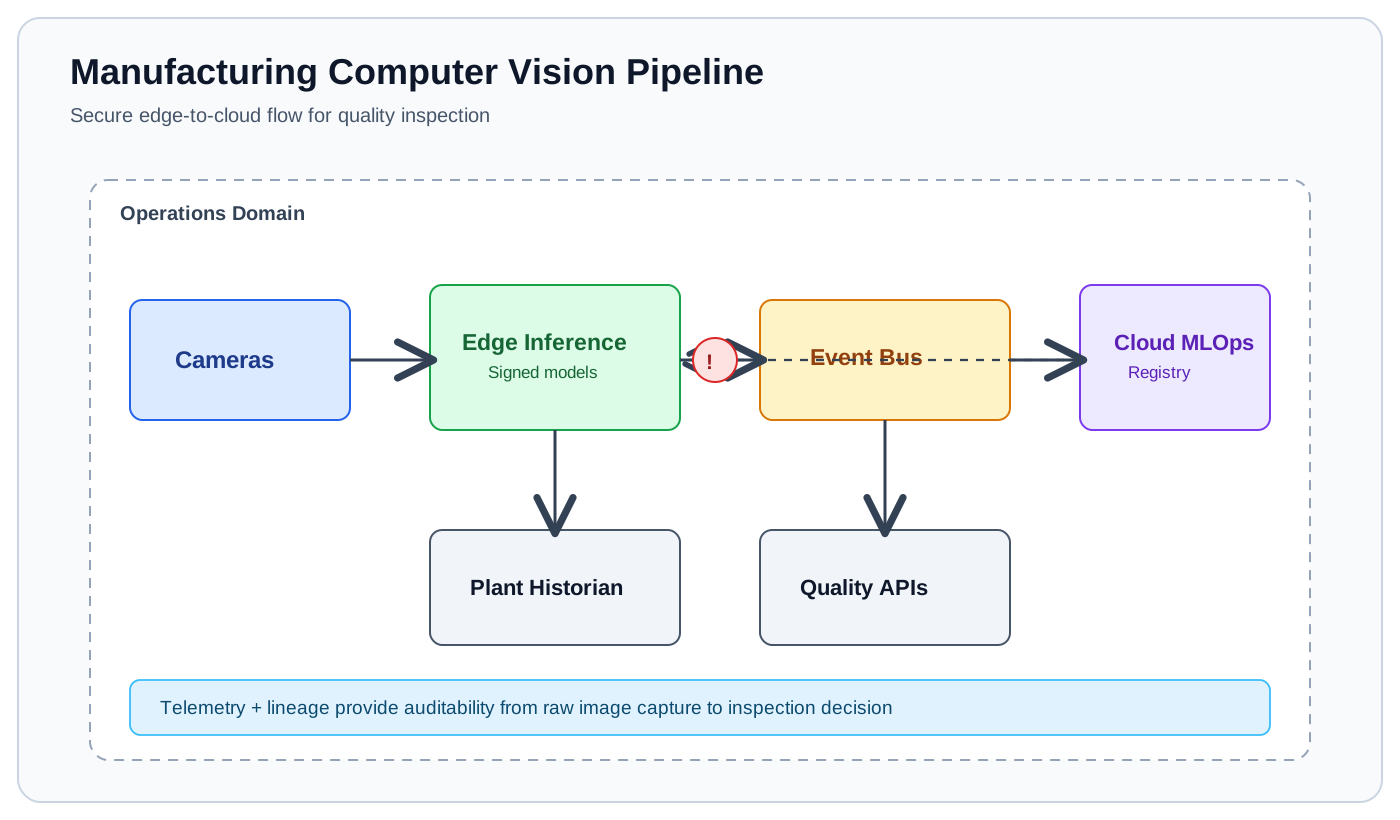
We mapped model supply-chain risks, camera ingestion trust zones, and attack paths from edge devices into cloud control surfaces.
2. Architecture Redesign
We introduced a decoupled edge-to-cloud architecture with signed model distribution, event buffering, and plant-level failover.
3. Implementation
Secure model loading and last-known-good rollback patterns were implemented in the .NET edge runtime to reduce line stoppage risk.
public sealed class SignedModelLoader : IModelLoader
{
    private readonly IArtifactVerifier _verifier;
    private readonly IInferenceRuntime _runtime;

    public async Task<ModelHandle> LoadAsync(ModelArtifact artifact, CancellationToken ct)
    {
        var signatureOk = await _verifier.VerifyAsync(artifact, ct);
        if (!signatureOk)
        {
            throw new SecurityException("Model signature verification failed.");
        }

        var handle = await _runtime.LoadAsync(artifact.Path, ct);
        return handle.WithFallback("last-known-good");
    }
}
4. Testing
CI included data contracts, model regression checks, edge chaos tests, and infrastructure security gates for every release.
suite: vision-pipeline-validation
stages:
  - name: data-contract-tests
    command: pytest tests/contracts --maxfail=1
  - name: model-regression
    command: python tests/regression/run.py --dataset smoke_v3
  - name: edge-chaos-tests
    command: dotnet test tests/EdgeRuntime.Tests --filter Category=Chaos
  - name: security-gates
    command: trivy fs --exit-code 1 .
Results
False positive defect alerts
22% -> 7%
Inspection throughput
+34% without added hardware
Model rollout reliability
99.3% successful edge deployments
Audit readiness
Full model lineage and access logs
Team
Led by Feroze Basha, .NET Security Specialist, in partnership with AI platform and MLOps engineers.